“Experts emphasised that the issue extends beyond individual acts of filming and reflects wider patterns of misogyny, surveillance and the erosion of women’s informational autonomy.”
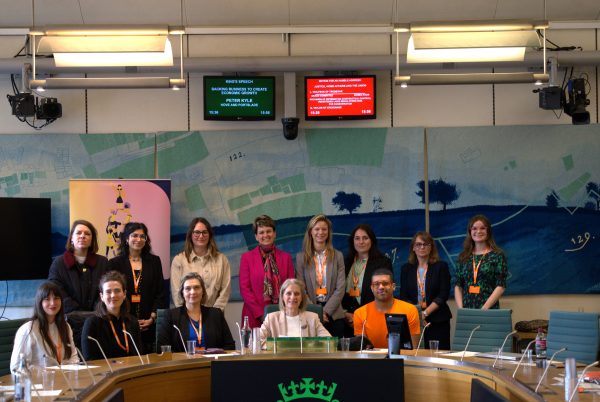
On 18 May 2026, the Centre for Protecting Women Online (CPWO) hosted a parliamentary roundtable with Wera Hobhouse MP, bringing together academics, campaigners, policy experts, law enforcement representatives and civil society organisations to discuss the growing problem of covert filming of women and girls in public spaces.
The discussion was convened in support of Wera Hobhouse MP’s forthcoming Private Members’ Bill, which seeks to address legal gaps that allow women to be filmed in public without their knowledge, with footage subsequently shared online in sexualised and exploitative ways. Participants reflected on recent investigations exposing the scale of this content, its monetisation, and the profound impact it can have on those targeted.
Speakers included Dr Briony Anderson (Durham University), Dr Sophie Nightingale (Nightingale Lab, Lancaster University), Rebecca Hitchen (EVAW Coalition), Superintendent Nicola Williams (Greater Manchester Police’s City of Manchester District), Professor Fiona Vera-Gray (London Metropolitan University), Professor Olga Jurasz (Centre for Protecting Women Online), and Glitch.
A central theme throughout the discussion was that covert filming is not a victimless activity. Contributors highlighted the long-term harms experienced by women and girls, including harassment, sexualised commentary, reputational damage, loss of privacy, and the enduring psychological impact of being knowingly or unknowingly recorded and shared online. Speakers noted that many victims are young women at formative stages of their lives and careers, while Black women, LGBTQIA+ individuals and other minoritised groups can experience additional layers of harm.
Experts emphasised that the issue extends beyond individual acts of filming and reflects wider patterns of misogyny, surveillance and the erosion of women’s informational autonomy. Participants discussed how platform design, recommendation systems and engagement-driven business models can amplify harmful content, encouraging creators to profit from the objectification and degradation of women.
Wera Hobhouse MP shared, ” Every woman should be able to enjoy a night out, walk down the street, or simply exist in public without worrying that she will be recorded without her knowledge and turned into content for others to exploit. What this roundtable made abundantly clear is that these videos are not harmless entertainment; they are a form of targeted misogyny that can leave women facing humiliation, abuse and real fear for their safety. I am grateful to the Centre for Protecting Women Online for helping us bring together such a wide range of experts to help ensure the law finally catches up with the realities of this abuse.”
The roundtable also examined the challenges facing law enforcement and regulators. Representatives from policing outlined difficulties in pursuing existing offences where criminal thresholds are not clearly met, despite significant distress being caused to victims. While civil orders and community protection powers can sometimes be used, there was broad agreement that existing legal tools are insufficient and that clearer legislation would provide greater certainty for victims, police and prosecutors alike.
Alongside legislative reform, participants called for a wider ecosystem response. Recommendations included strengthening platform accountability, expanding safety-by-design requirements for technology companies, improving regulatory oversight, increasing public awareness, and investing in education that helps people understand the real-world harms caused by non-consensual filming and online abuse.
Professor Olga Jurasz highlighted the need to place harms, rights and prevention at the centre of policy responses, arguing that the law has too often lagged behind women’s lived experiences of technology-facilitated abuse.
The discussion concluded with a shared recognition that addressing covert filming requires coordinated action across government, regulators, industry, law enforcement and civil society.
As Wera Hobhouse MP’s campaign progresses, participants committed to continuing collaboration to ensure women and girls can enjoy public spaces without fear. The law and policy stream co-led by Dr Alishya Dhir and Leyla Buran, as well as Professor Olga Jurasz, Director of the Centre, will continue to support the development of this work.