CPWO Research Seminar – November
Understanding and Addressing Online Harms Against Women and Girls through Research
Online spaces play a huge role in our everyday lives, offering connection, creativity, and community. Yet for many women and girls, these spaces can also bring real risks and harm. These Research Seminars open up a shared conversation about how research can help us understand these experiences and find practical ways to make digital spaces safer and more inclusive. Bringing together researchers, students, practitioners, and members of the wider community, the event is an opportunity to learn from one another, share insights, and explore how we can work collectively to create lasting change.
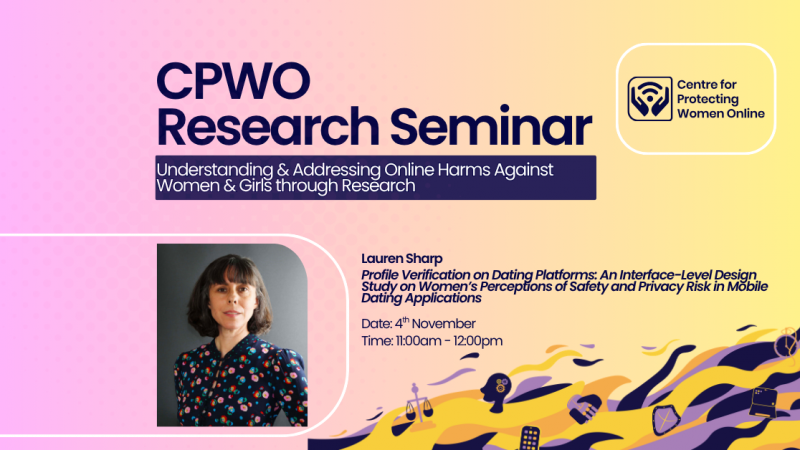
We are delighted to welcome Lauren Sharp to lead this Research Seminar. Further details about the talk, the speaker’s biography, and a link to book a place are provided below.
Profile Verification on Dating Platforms: An Interface-Level Design Study on Women’s Perceptions of Safety and Privacy Risk in Mobile Dating Applications
Profile verification varies across dating platforms and is managed by each platform. While platforms are subject to safety and data regulations, there is no standardised requirement defining how profile verification should be implemented and communicated. The intention of profile verification is to increase confidence that users are engaging with a human. There is a gap between the trust users place in these signals and the level of assurance they provide. The study aims to understand how women in the United Kingdom (UK) interpret and respond to profile verification on Tinder and Bumble, including how verification badges shape perceptions of safety and privacy. The study uses unobtrusive, non-participatory digital ethnography of publicly available online discussion, collected on YouTube and Reddit from dating, safety and scam-related subreddits and relevant YouTube videos. Because gender cannot be reliably identified in such data, this phase captures the general shape of the discourse rather than women’s views specifically. Its themes inform the second phase, a survey of women in the UK that asks how far the understandings, concerns and workarounds found in the wider discourse reflect women’s own experience. With algorithmic imaginaries and folk theories as the interpretive lens for how users explain what verification does and how it works. The study offers an account of how women read, trust, question and work around verification. It has implications for how platforms and regulators communicate what verification does and does not assure, and for interface-level interventions that close the gap between what verification signals and what users take it to mean.
About the Speaker
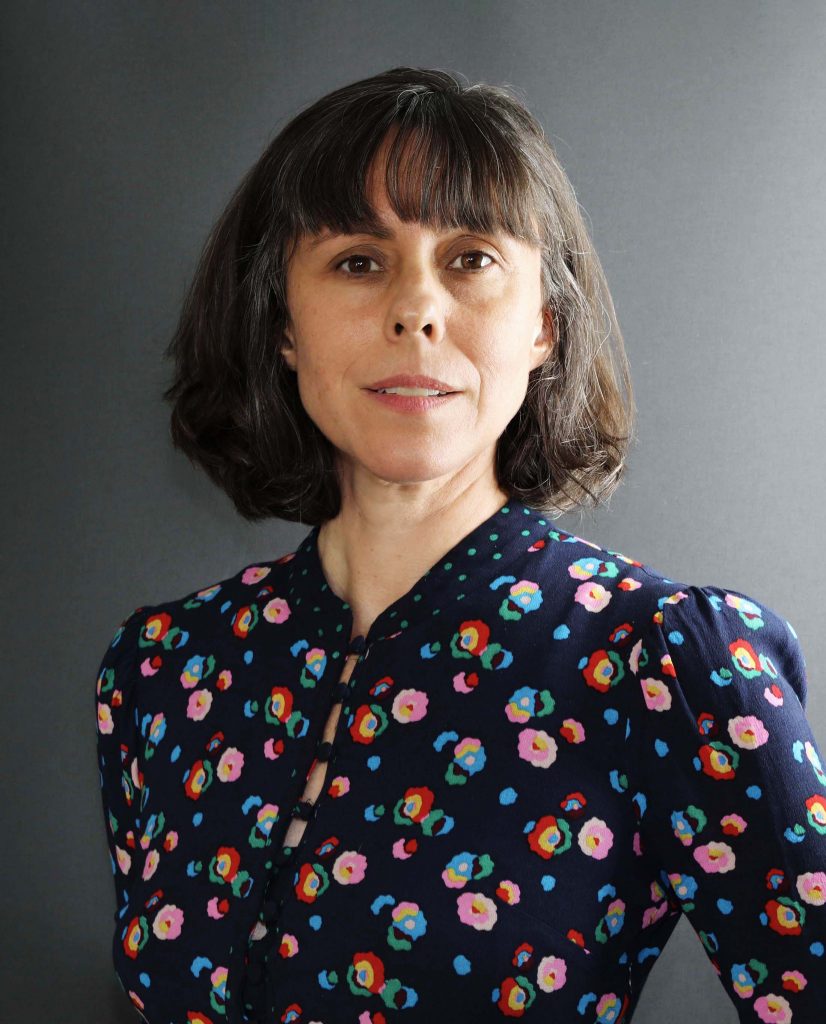
Lauren Sharp is an applied design researcher focused on digital dating platforms, examining how interface and interaction design shape user fatigue, dissatisfaction, and perceptions of trust and safety. She works for the Online Dating and Discovery Association (ODDA), where she is co-leading the development of a research hub to support collaboration between dating platform member organisations and academia. Lauren is an Industry and Innovation Fellow with the Centre for Protecting Women Online (CPWO) at the Open University, where her research focuses on identity verification, data practices, and women’s perceptions of safety and data sharing in dating platforms.