Project Team:
Dr. Nelli Stavropoulou
Principle Investigator

Prof. Rose Capdevila
Co-Investigator

Prof. Lisa Lazard
Co-Investigator
Project Overview:
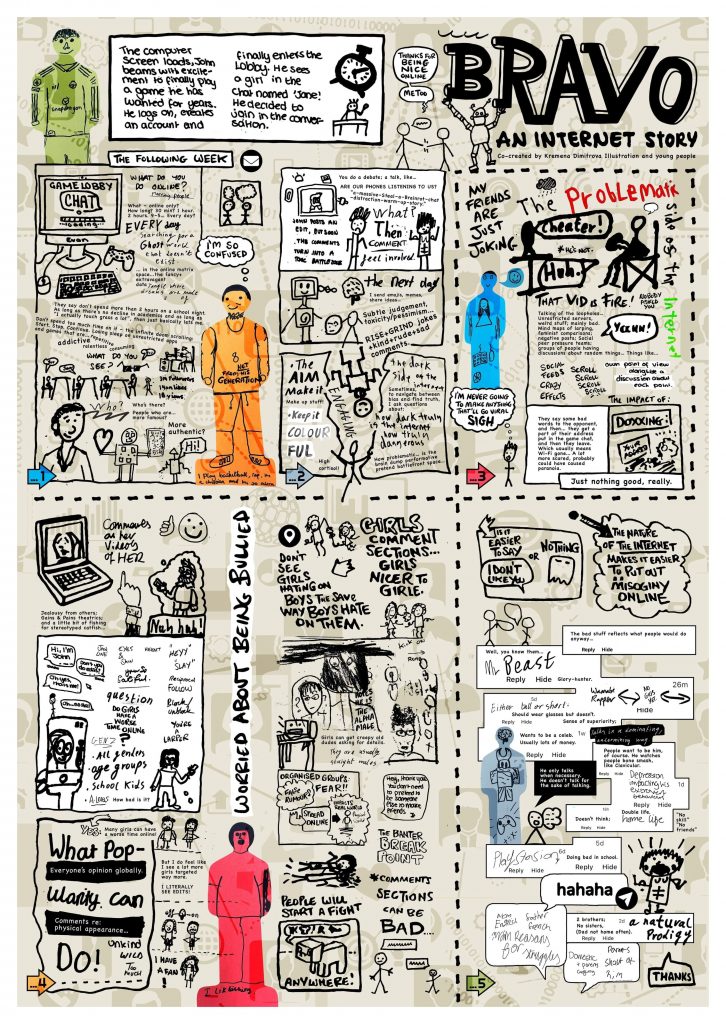
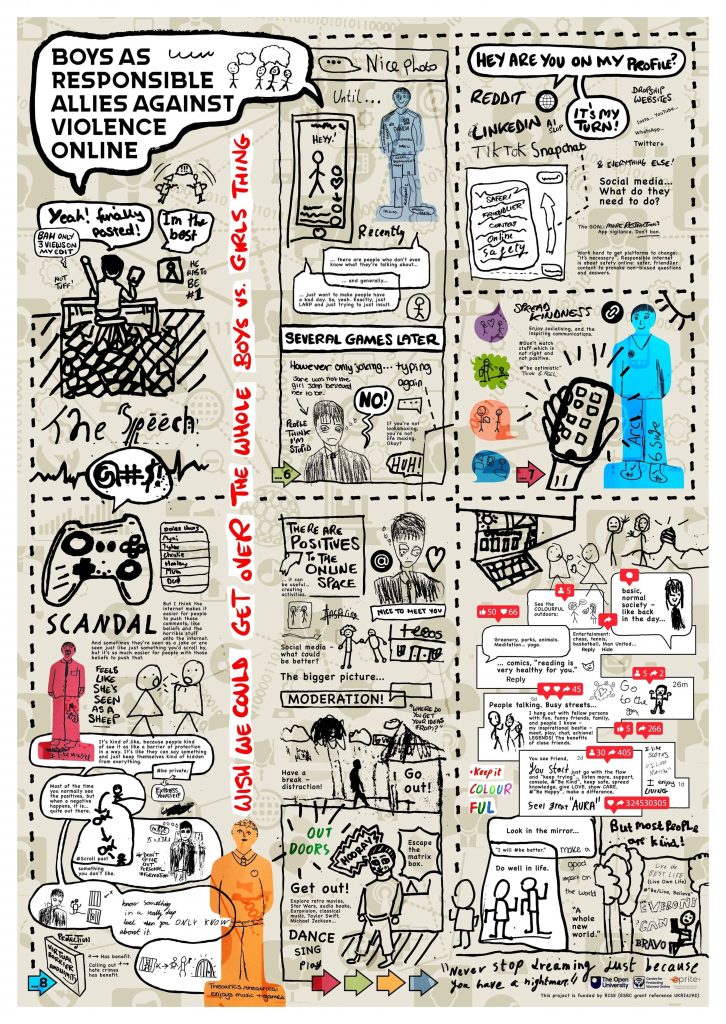
The Boys (as) responsible allies against violence online (BRAVO) study investigates how young men and boys make sense of and negotiate everyday online violence against women and girls (OVAWG). BRAVO took a participatory approach, using co-creation to foreground the online experiences of young men and boys. The aim was to co-develop an evidence-based learning resource for young people, parents/carers and educators.
BRAVO directly addresses current UK policy priorities around OVAWG, online safety and prevention, focusing on young people’s online experiences, and specifically on the role of young men and boys. Current scholarship has foregrounded extremist misogynistic subcultures and radicalisation pathways, but much less is known about how young men and boys interpret, respond to and resist OVAWG within their everyday digital environments.
Between May – July 2026, the BRAVO team worked together with a group of nine young men and boys aged between 13-16 in a secondary school in the UK. The boys participated in four artist-led sessions including creative activities such as drawing, zine-making and guided conversations around digital spaces and behaviours. After the sessions, young people were invited to share their feedback on postcards to capture their learning and accounts. A follow-up feedback interview was also conducted with the school’s headteacher. To acknowledge the boys’ valuable contributions in co-creating the project, it concluded with a celebration event, where they were presented with certificates of participation.
The findings provide important insights into how ideas associated with the manosphere and incel communities, can become embedded and resisted in and through young people’s mainstream digital cultures. Importantly, our research demonstrates that young men and boys are not passive consumers of such content. In fact, they are actively making sense of it, navigating peer pressures, negotiating online cultures, and in some cases challenging and rejecting harmful narratives. A key policy gap addressed by our project is the risks of only individualising the responsibility of online safety (e.g. teaching young people to ‘make better choices online’). BRAVO reaffirms that prevention also needs to consider the wider environment in which such choices are made including peer relationships, digital cultures, bystander behaviour, algorithmic amplification, digital representations of masculinity, among others.
BRAVO recognised young men and boys’ existing capacities for allyship, prioritising critical digital literacy and digital citizenship approaches over restrictive or deficit-based interventions, and produced research-informed learning resources for educators to better understand contemporary manifestations of online misogyny including evolving online terminology, influencer cultures and platform dynamics. It also linked these manifestations to broader and enduring gendered and intersectional inequalities.
Project Dates:
13th April 2026 – 31st August 2026
Partnering Organisations:
Internet Matters
MK Fawcett
Outputs and Resources:
BRAVO has resulted in a number of key outputs. These include a research facilitation guide for engaging young people in creative and participatory research around online safety, as well as youth-informed teaching guides for KS2-4 for young people, educators and parents/carers. The learning resources will be developed for submission for PSHE accreditation, enabling its wider application across educational and community learning settings.
Associated Links:
- https://www.spritehub.org/rise-funded-projects/boys-as-responsible-allies-against-violence-online
- https://www.linkedin.com/company/spriteplus
- https://www.youtube.com/watch?v=PxJ51aLZPEw&list=PLcGLUDuS3ErY&index=10
RISE is funded via the UKRI’s R&D Missions Accelerator Programme and benefits from the support of the Network for Security Excellence & Collaboration (NSEC) and the SALIENT Hub.